
It was a beautiful spring morning when I arrived in Kathmandu, the
capital city of Nepal. As soon as I stepped out of the airport, I was
struck by the vibrant colors, the chaos of the streets.
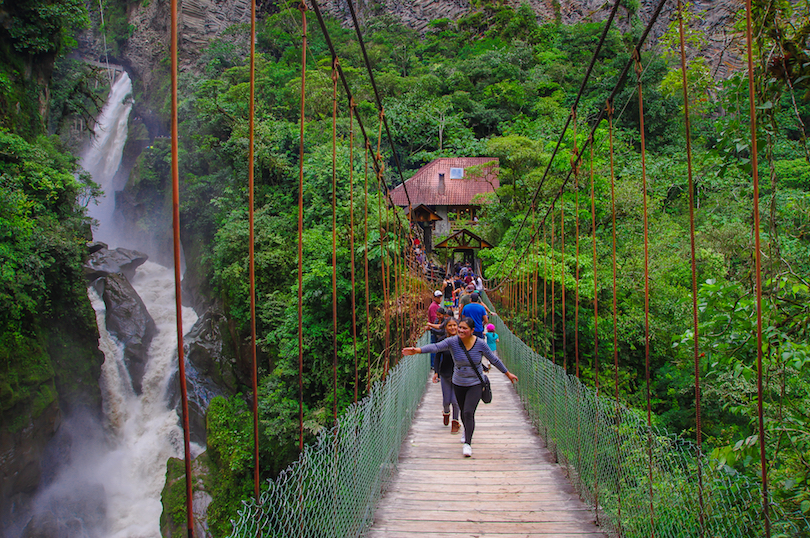
Baños de Agua Santa, Ecuador is a great place to reboot your adventurous spirit whether its whitewater rafting down class III rapids, downhill mountain biking by a series of waterfalls, ziplining at nose-bleed heights through canyons, or paddling dugout canoes on the Puyo river in Amazonia.
Downtown Baños is not quiet. It’s bustling year-round with gap-year backpackers swigging beers at downtown bars, travelers grabbing cappuccinos in Starbucks-like cafes, and vendors hawking guided tours from small shops lining the streets offering “just for you” discounts for those tackling the myriad of outdoor sports.
For the more laidback traveler looking for a relaxing spa vacation, massages start at $25 and can be found on just about every street corner. For as little as $3 per person you can enjoy the healing waters of the hot mineral springs with temperatures up to 130 F heated by Tungurahua, the nearby active volcano. It’s a town that has successfully meshed extreme sports, relaxing spas, and an active Volcano. Expats love it—whether as a vacation spot, or place to settle amongst nature.
Baños is touristy, crowded, and not that scenic until you step just outside of town and you’ll see why it owns the moniker “Adventure Capital of Ecuador” and you will be stymied by its beauty. Baños de Agua Santa, which means “Baths of Sacred Water” is appropriately named, with more than 60 waterfalls, hot mineral springs, and rivers encasing the city. The population is less than 20,000 but more than doubles during tourist season—which is pretty much every day. The climate ranges between 55 F at night up to about 80 F during the day, even though it’s at an elevation of 1,820 meters (5,971 feet) but stays warm due to its proximity to the equator. It’s a mere three-and-a-half-hour drive south from Quito, Ecuador through the Andes, and the trip to get to Baños is worth the ride.
The town seems to collect monikers and is also known as the “Gateway to the Amazon,” because it is the starting point to explore the jungle’s offerings including national parks, spewing volcanoes, and llamas who graze by the roads. It’s popularity as a tourist destination is marked by the more than 100 hotels ranging in prices from backpacker hostels starting at $20 a night to upscale haciendas nearing $100 for two, and loads of restaurants lining the downtown streets.
The locals who live year-round in Baños are firmly planted in the tourist industry, except for the indigenous population who live on farms outside of Baños and supply the endless lineup of fresh vegetables and fruits, roasted pigs on spits, and textiles which are hawked at the farmer’s market located downtown.
Because it’s a tourist destination, the amenities are top notch, with strong internet, medical clinics (it is an extreme sports town after all), and a hospital in Ambato, which sits an hour away. Spanish is the predominate language so arm yourself with Google Translate. Because Baños is international, you’ll hear German, Polish, French, Swedish spoken everywhere and there’s usually a friendly bi-lingual passer-by who will help with translations.
